
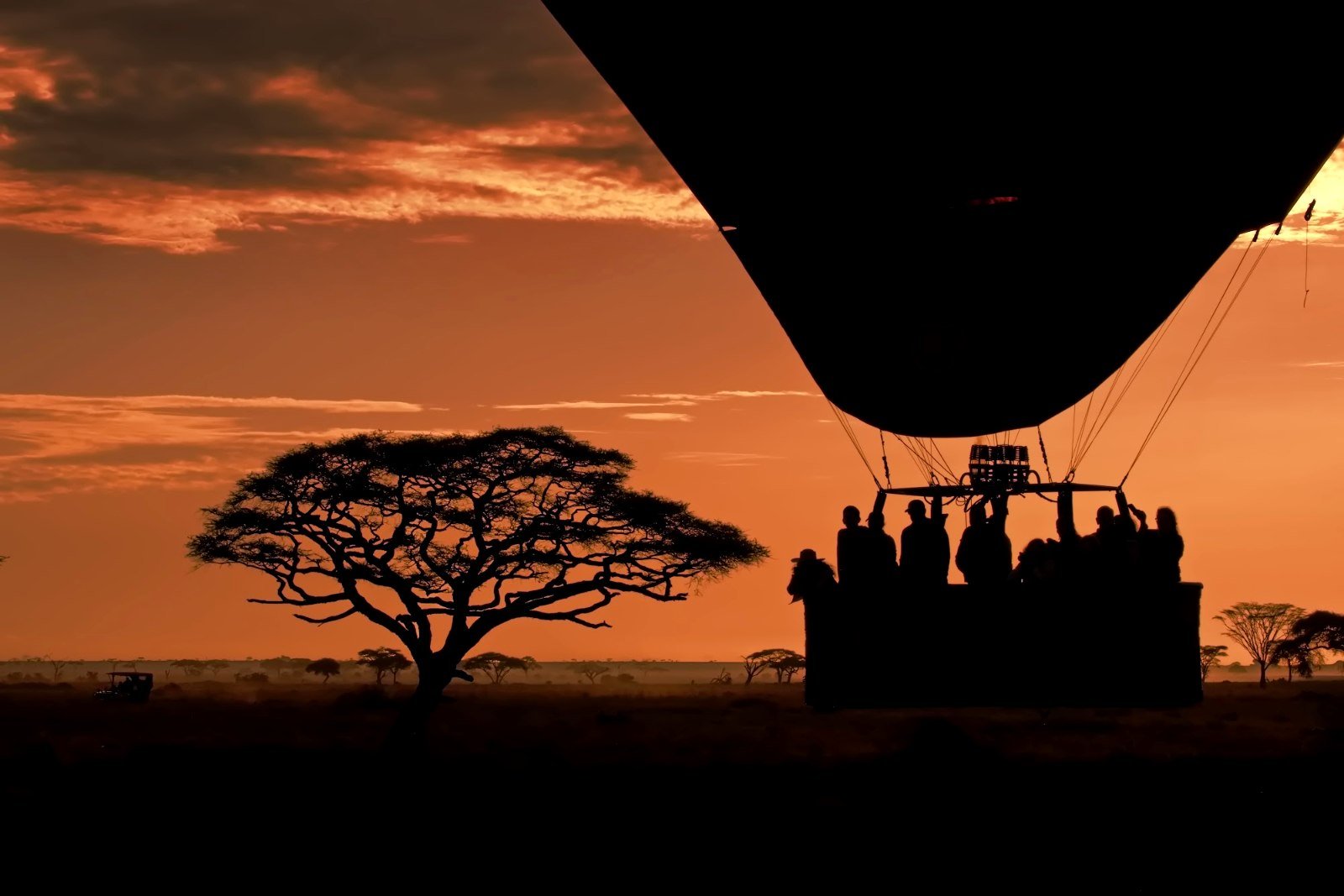
A Serengeti safari is one of Africa’s ultimate wildlife experiences.
Located in northern Tanzania, Serengeti National Park is famous for its enormous open plains, abundant wildlife, spectacular landscapes and the annual Great Migration of wildebeest, zebras and other grazing animals.
But you do not have to visit during the Great Migration to enjoy an unforgettable safari.
Throughout the year, the Serengeti offers opportunities to see lions, elephants, leopards, cheetahs, buffalo, giraffes, hippos and thousands of other animals. You can explore the park on traditional game drives or take your experience to another level with a Serengeti balloon safari.
So, when is the best time to visit?
How many days do you need?
Where should you stay?
And how much does a Serengeti safari cost?
This complete guide answers those questions and helps you plan the right Serengeti safari in Tanzania.
Serengeti Safari at a Glance
The Great Migration does not follow an exact calendar. The animals move according to rainfall, fresh grass and environmental conditions, so travelers should think in terms of general migration periods rather than guaranteed dates or locations.
Why Visit Serengeti National Park?
There are many reasons the Serengeti is considered one of the world’s premier safari destinations.
1. Exceptional Wildlife
The Serengeti supports an extraordinary variety of wildlife.
You can potentially see:
- Lions
- Leopards
- Cheetahs
- Elephants
- Buffalo
- Giraffes
- Hippos
- Zebras
- Wildebeest
- Hyenas
- Gazelles
- Crocodiles
- Antelope
- Hundreds of bird species
The diversity of habitats means that every game drive can be different.
2. The Great Migration
The Serengeti is the setting for one of the world’s most spectacular natural events.
Millions of wildebeest, together with large numbers of zebras and gazelles, move through the greater Serengeti ecosystem in search of fresh grazing and water.
The migration is not a single event lasting a few weeks.
It is a year-round ecological cycle.
This means there is always something happening somewhere within the ecosystem.
3. Beautiful Landscapes
The Serengeti is much more than wildlife.
Its landscapes include:
- Endless grass plains
- Rocky kopjes
- Woodlands
- Rivers
- Seasonal waterholes
- Acacia-covered areas
- Open savannah
The scenery changes considerably as you move through different parts of the park.
The Big Five on a Serengeti Safari
The Serengeti is an excellent destination for travelers hoping to see Africa’s famous Big Five.
These are:
Lion
Lions are among the most frequently encountered big cats in the Serengeti.
They can often be seen resting during the heat of the day or becoming active during the cooler morning and evening hours.
Leopard
Leopards are more elusive.
They often rest in trees or dense vegetation, making sightings particularly exciting.
Elephant
Elephants can be encountered in different areas of the Serengeti and are especially impressive when seen against the open savannah.
Buffalo
Large buffalo herds are another common wildlife highlight.
Rhinoceros
Black rhinos are much harder to see than the other Big Five, but sightings are possible in suitable areas.
Important: Wildlife sightings are never guaranteed. The Serengeti is a wild ecosystem, and animal movements change every day.
The Great Migration Safari
What Is the Great Migration?
The Great Migration is the seasonal movement of huge herds of wildebeest, zebras and gazelles across the Serengeti ecosystem and into Kenya’s Maasai Mara.
The animals follow rainfall and fresh grazing.
For safari travelers, this creates extraordinary opportunities to witness:
- Huge herds
- Predator activity
- Calving
- River crossings
- Territorial behavior
- Dramatic wildlife interactions
Great Migration Month-by-Month Guide
The following provides a general planning framework.
These locations are general patterns rather than guarantees. Rainfall can change the timing and location of the herds.
When Is the Best Time for a Serengeti Safari?
There is no single best month for everyone.
The ideal time depends on what you want to experience.
June to October – Dry Season
This is one of the most popular periods for a Serengeti safari.
Advantages include:
- Generally drier weather
- Excellent game viewing
- Animals often concentrate around water
- Good visibility
- Comfortable safari conditions
- Potential Great Migration activity
July–September is particularly popular among travelers interested in the northern Serengeti and possible Mara River crossings.
However, river crossings are unpredictable. They should never be sold as a guaranteed experience.
January to March – Calving Season
This period is particularly interesting for travelers who want to see young animals.
The southern Serengeti and Ndutu area can become extremely productive during the calving season.
Possible experiences include:
- Wildebeest calves
- Zebras
- Predators
- Lions
- Cheetahs
- Hyenas
- Dramatic hunting activity
For wildlife photographers, calving season can be exceptional.
April to May – Green Season
The long-rain period can produce spectacular scenery.
Advantages can include:
- Green landscapes
- Fewer visitors in some areas
- Excellent photography
- Potentially lower accommodation rates
- Migratory wildlife
Rain can affect road conditions and safari logistics, so travelers should plan accordingly.
November to December – Short Rains
The short rains can transform the landscape and trigger new vegetation growth.
This period can offer:
- Green scenery
- Good wildlife
- Fewer visitors than peak periods
- Potentially better accommodation value
How Many Days Do You Need for a Serengeti Safari?
Your ideal Serengeti safari length depends on your budget and priorities.
2 Days
A 2-day safari is possible for travelers with very limited time.
Best for:
Quick Serengeti experience
However, travel logistics can take up a significant proportion of the trip.
3 Days
Recommended for a Short Serengeti Safari
Three days gives you considerably more time for game drives.
Example:
Day 1: Fly/drive to Serengeti + game drive
Day 2: Full-day Serengeti safari
Day 3: Morning game drive + departure
View 3-Day Serengeti Safari Packages
4–5 Days
Best for Most Travelers
Four or five days allows you to explore more extensively and potentially move between different areas.
You can also combine Serengeti with Ngorongoro.
Example:
Day 1: Arusha → Serengeti
Day 2: Full-day Serengeti
Day 3: Full-day Serengeti
Day 4: Serengeti → Ngorongoro
Day 5: Ngorongoro Crater → Arusha
View 5-Day Tanzania Safari Packages
6–7 Days
Best for a More Relaxed Safari
Seven days allows more time for:
- Serengeti
- Ngorongoro
- Tarangire
- Multiple game drives
- Different wildlife areas
It is particularly suitable for photographers, families and travelers who do not want to rush.
View 7-Day Tanzania Safari Packages
Where to Stay in Serengeti
Accommodation is one of the biggest decisions when planning your safari.
You can choose between:
Budget Camps
Best for travelers prioritizing wildlife and affordability.
Typical features:
- Tented accommodation
- Shared or private facilities depending on the camp
- Basic but comfortable facilities
- Full-board meals
From approximately $200/day for a complete budget safari package, depending on the itinerary.
Mid-Range Lodges & Tented Camps
Mid-range accommodation is ideal for travelers who want comfort without paying luxury prices.
You can expect:
- Private bathrooms
- Comfortable beds
- Restaurant or dining area
- Electricity
- Hot showers
- Comfortable tented rooms or lodges
A mid-range safari commonly starts around $350–$700 per person per day, depending on the itinerary, season and group size.
Explore Mid-Range Tanzania Safari Packages
Luxury Serengeti Camps
Luxury camps offer a completely different safari experience.
Facilities may include:
- Spacious luxury tents
- Premium furnishings
- Private verandas
- Fine dining
- Swimming pools
- Spa treatments
- Premium locations
- Personalized service
Luxury Serengeti safaris can start around $700 per person per day and rise substantially for premium camps, exclusive-use properties and fly-in itineraries.
Explore Luxury Serengeti Safari Packages
Which Area of Serengeti Should You Stay In?
The Serengeti is enormous, so location matters.
Central Serengeti
Known for:
- Year-round wildlife
- Convenient access
- Kopjes
- Predator sightings
It is a good choice for first-time visitors.
Northern Serengeti
Best known for:
- Great Migration season
- Northern landscapes
- Mara River area
- Potential river-crossing experiences
Particularly popular from approximately July to October.
Western Serengeti
Known for:
- Grumeti ecosystem
- Wildlife
- River environments
- Migration activity during certain periods
Southern Serengeti
Especially attractive during:
- January
- February
- March
This area is associated with the calving season and large concentrations of migratory animals.
Serengeti Game Drives
Game drives are the heart of a Serengeti safari.
A typical day may include:
Morning Game Drive
Early morning is one of the best times to be on safari.
Wildlife can be active, temperatures are cooler and the light is excellent for photography.
Midday
Return to camp or enjoy a picnic lunch.
Afternoon Game Drive
Continue exploring the park before returning to camp around sunset.
Full-Day Game Drive
For travelers who want maximum time in the park, a full-day game drive can be an excellent option.
You leave camp with a packed lunch and spend much of the day exploring different areas.
This allows your guide to respond to wildlife activity and explore farther from camp.
Serengeti Balloon Safari
A Once-in-a-Lifetime Experience
A hot-air balloon safari offers a completely different perspective of the Serengeti.
The experience generally begins before sunrise.
You rise above the plains while the sun comes up over the landscape.
From the balloon, you may see:
- Herds of wildebeest
- Zebras
- Elephants
- Giraffes
- Rivers
- Savannah landscapes
After landing, many balloon experiences include a special bush breakfast.
Is a balloon safari worth it?
For many travelers, yes.
It is particularly suitable for:
- Honeymooners
- Couples
- Photographers
- Anniversary trips
- Luxury travelers
- Special celebrations
A balloon safari is normally an additional cost to the standard safari package.
Add a Serengeti Balloon Safari to Your Package
How Much Does a Serengeti Safari Cost?
The Serengeti safari cost depends on:
- Number of days
- Season
- Accommodation
- Group size
- Private vs shared safari
- Park fees
- Transport
- Domestic flights
- Activities
- Safari route
Indicative 2026 Starting Prices
These are indicative “from” prices, not fixed rates.
A 3-day Serengeti safari may therefore start from approximately $900 per person, while a premium fly-in luxury safari can cost several thousand dollars.
What Does a Serengeti Safari Package Include?
A safari quotation can include different services depending on the operator.
A typical package may include:
Park Fees
Applicable Serengeti conservation and park entry fees.
Safari Vehicle
A 4×4 safari vehicle designed for wildlife viewing.
Professional Guide
Experienced driver-guide.
Accommodation
Budget campsite, mid-range lodge or luxury camp.
Meals
Usually breakfast, lunch and dinner.
Game Drives
Daily wildlife-viewing activities.
Drinking Water
Water during game drives.
Airport Transfers
Where specified.
Domestic Flights
Included when the itinerary uses fly-in/fly-out arrangements.
Always confirm the exact inclusions before making a booking.
Additional Costs to Budget For
Your Serengeti safari price may not include everything.
Plan separately for:
- International flights
- Travel insurance
- Visa
- Tips
- Alcoholic beverages
- Laundry
- Souvenirs
- Balloon safari
- Personal expenses
Private vs Group Serengeti Safari
Private Serengeti Safari
A private safari gives your group its own vehicle and guide.
Advantages
- Flexible itinerary
- Private vehicle
- Personalized game drives
- More photography opportunities
- Flexible departure times
- Ideal for families
- Ideal for couples
- Better for small groups
Best for: Couples, families, friends and private groups.
View Private Serengeti Safari Packages
Group Serengeti Safari
A group safari allows you to share transportation and some operational costs with other travelers.
Advantages
- Lower price
- Social experience
- Good for solo travelers
- Suitable for budget travelers
Disadvantages
- Less flexibility
- Shared vehicle
- Fixed itinerary
- Different traveler preferences
If your priority is affordability, a group safari can be an excellent option.
Serengeti + Ngorongoro Safari
Combining Serengeti with Ngorongoro is one of Tanzania’s most popular safari combinations.
Why Combine Them?
Serengeti provides:
Open plains + predators + migration + expansive wildlife
Ngorongoro provides:
Crater scenery + concentrated wildlife + unique ecosystem
A 4–5 day itinerary can combine both destinations comfortably.
Example
Day 1: Arusha → Serengeti
Day 2: Full-day Serengeti
Day 3: Serengeti → Ngorongoro
Day 4: Ngorongoro Crater
Day 5: Ngorongoro → Arusha
View Serengeti & Ngorongoro Safari Packages
Serengeti + Tarangire + Ngorongoro
For travelers with more time, add Tarangire.
5–7 Day Route
Arusha → Tarangire → Ngorongoro → Serengeti → Arusha
This is one of the classic Northern Circuit routes.
Highlights
Tarangire: Elephants and baobabs
Ngorongoro: Crater wildlife
Serengeti: Big cats and migration
View Northern Tanzania Safari Packages
Serengeti Safari From Zanzibar
Already staying in Zanzibar?
You can combine your beach holiday with a Serengeti safari.
Instead of returning home after Zanzibar, fly from Zanzibar toward Arusha or the Serengeti, depending on your chosen itinerary and available flight schedules.
Short Option
Zanzibar → Serengeti → Zanzibar
Ideal for 2–3 days.
Classic Option
Zanzibar → Arusha → Tarangire → Ngorongoro → Serengeti → Zanzibar
Ideal for 5–7 days.
Ultimate Tanzania Holiday
Zanzibar + Serengeti + Ngorongoro + Tarangire
Ideal for 8–12+ days.
Explore Tanzania Safari From Zanzibar Packages
Serengeti + Zanzibar Packages
Combining a Serengeti safari with Zanzibar is one of the best ways to experience Tanzania.
Example 10-Day Tanzania Holiday
Days 1–2
Zanzibar
Beach relaxation and island activities.
Day 3
Zanzibar → Arusha
Fly to Arusha.
Day 4
Tarangire National Park
Full-day game drive.
Day 5
Ngorongoro Crater
Crater game drive.
Day 6
Ngorongoro → Serengeti
Game drive en route.
Day 7
Serengeti
Full-day game drive.
Day 8
Serengeti
Full-day game drive or optional balloon safari.
Day 9
Serengeti → Arusha
Fly or drive depending on itinerary.
Day 10
Departure.
For a longer holiday, you can place Zanzibar before or after your safari.
View Safari + Zanzibar Packages
Best Serengeti Safari for Different Travelers
What to Pack for a Serengeti Safari
Bring practical, comfortable clothing.
Recommended:
- Lightweight trousers
- T-shirts
- Long-sleeved shirts
- Comfortable walking shoes
- Hat
- Sunglasses
- Sunscreen
- Insect repellent
- Light jacket
- Camera
- Binoculars
- Power bank
- Reusable water bottle
Neutral colors such as khaki, beige, brown and olive are practical for safari.
Serengeti Safari Travel Tips
Book Early for Peak Season
July–October can be extremely popular, particularly around migration areas.
Choose Your Location Carefully
The Serengeti is huge.
Your accommodation location should match what you want to see.
Do Not Choose a Safari Only by Price
A cheaper safari may use:
- Longer driving routes
- Lower-cost accommodation
- Shared vehicles
- Different park access arrangements
Compare inclusions carefully.
Allow Enough Time
Three days can work, but four to seven days allows a much richer experience.
Listen to Your Guide
Experienced guides know the park, animal behavior and current wildlife movements.
Their knowledge can make a major difference.
Frequently Asked Questions About Serengeti Safari
How much does a Serengeti safari cost?
A Serengeti safari can start at approximately $200 per person per day for budget travel, around $350–$700 for mid-range, and $700+ for luxury. Premium fly-in and ultra-luxury experiences can exceed $1,500 per person per day.
How many days do you need in Serengeti?
We recommend 3–5 days for most travelers. If you want a more relaxed experience or want to explore multiple areas, consider 5–7 days.
What is the best month for a Serengeti safari?
It depends on your goal. June–October is popular for dry-season wildlife viewing, while January–March is excellent for calving-season experiences.
When is the Great Migration in Serengeti?
The Great Migration occurs throughout the year. The herds move through different areas depending on rainfall and grazing conditions. June–October is particularly popular for migration-related safari experiences.
Can I see the Big Five in Serengeti?
Yes. Serengeti supports lions, leopards, elephants, buffalo and black rhinos. However, wildlife sightings are never guaranteed.
Is Serengeti worth visiting without the Great Migration?
Absolutely. Serengeti offers excellent wildlife viewing throughout the year and is one of Tanzania’s premier safari destinations.
Is a Serengeti balloon safari worth it?
For travelers looking for a special experience, a balloon safari can be an unforgettable addition. It is particularly popular for honeymoons, anniversaries and special occasions.
Can I visit Serengeti from Zanzibar?
Yes. You can fly from Zanzibar toward Arusha or directly toward the Serengeti depending on the itinerary and available flights.
Can I combine Serengeti with Zanzibar?
Yes. A Serengeti + Zanzibar holiday combines wildlife and safari adventure with beaches, snorkeling, culture and relaxation.
Is a private Serengeti safari better than a group safari?
A private safari provides greater flexibility and personalization, while a group safari generally offers a lower price.
Final Verdict: Is a Serengeti Safari Worth It?
A Serengeti safari in Tanzania is an exceptional choice for travelers who want to experience Africa’s wildlife in one of the world’s most famous natural landscapes.
For a quick trip, choose a 2–3 day Serengeti safari.
For a more complete experience, spend 4–5 days combining Serengeti and Ngorongoro.
For maximum flexibility and wildlife time, choose 5–7 days and consider adding Tarangire.
And if you are already visiting Zanzibar, consider combining your beach holiday with a Serengeti safari from Zanzibar.
Whether you are looking for the Big Five, the Great Migration, spectacular landscapes or a luxury safari experience, Serengeti can be tailored to your travel style and budget.
Ready to Experience the Serengeti?
From short Serengeti adventures to private luxury safaris and Serengeti + Zanzibar holidays, we can help create an itinerary around your dates, budget and preferred accommodation.
View Serengeti Safari Packages
Start planning your Serengeti adventure today.
[…] is particularly famous for the Great Migration, the Big Five, large elephant herds, big cats and some of Africa’s most scenic national parks […]